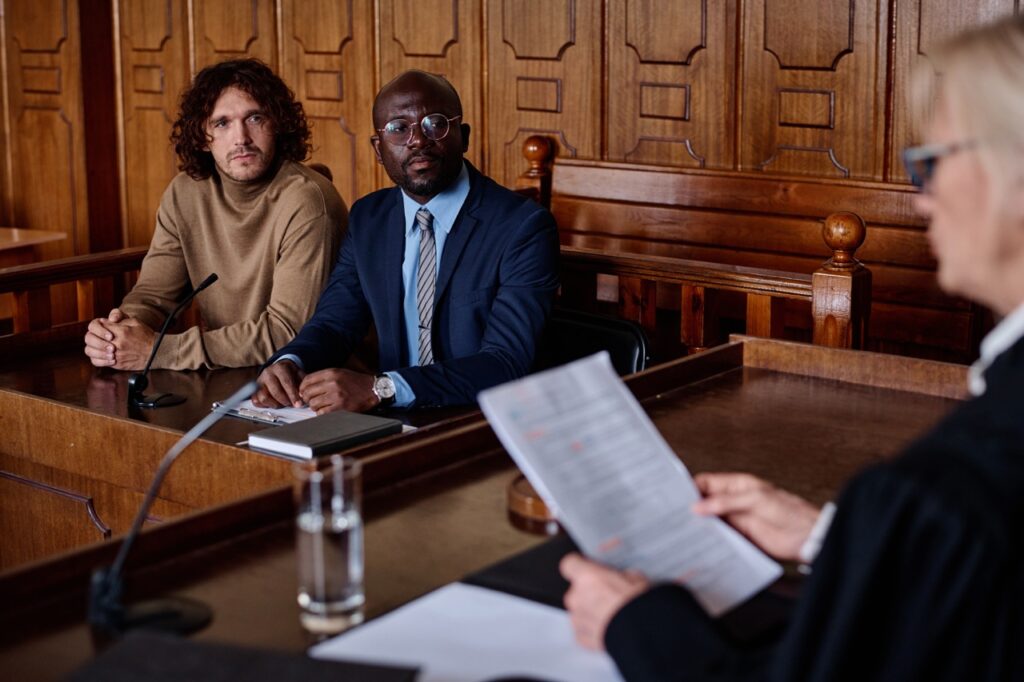

Probation is not freedom. It is a conditional arrangement — a set of obligations that, if not met, can land you back in front of a judge facing consequences far more severe than what you faced the first time. When a probation violation is alleged in Idaho, the rules are different from the original criminal case, and those differences almost always favor the prosecution. The burden of proof is lower. Certain constitutional protections that apply at trial don’t apply at a probation revocation hearing. And the judge who imposed your original sentence is typically the one hearing the violation — with your suspended sentence or unserved jail time sitting available to be imposed. John Malek Law Group defends people facing probation violation allegations throughout Idaho. We know how these hearings work, what the state must prove, and where the defense opportunities lie. If you’ve been accused of violating your probation anywhere in Idaho — including eastern Idaho — contact us immediately.
How Probation Violations Work in Idaho
When a probation officer believes a probationer has violated one or more conditions of their probation, they can file a report with the court and recommend violation proceedings. The court then issues a warrant or a summons for the probationer to appear and answer the alleged violation. This process can move quickly. Probation violation warrants are common, and once a warrant is issued, the probationer can be arrested and held without bond pending the revocation hearing in some circumstances. The period between a violation allegation and a revocation hearing can be short, which makes getting attorneys involved as early as possible — ideally before a warrant is issued, if there’s any warning — critically important.
Technical Violations vs. Substantive Violations
Not all probation violations are the same, and how they’re handled often depends on their nature and severity. Technical violations involve failing to comply with procedural conditions of probation that don’t involve new criminal conduct. Examples include:
- Failing to report to a probation officer as scheduled
- Moving without notifying the probation department
- Failing to complete required community service hours
- Not enrolling in or completing required treatment programs
- Missing payment deadlines for fines, fees, or restitution
- Failing a scheduled drug or alcohol test
Technical violations are the most common type of probation violation proceeding, and they’re also the type where effective advocacy most frequently results in an outcome that preserves probation status rather than resulting in revocation. Substantive violations involve being charged with a new criminal offense while on probation. A new arrest, a new charge, or a new criminal conviction while serving probation is one of the most serious bases for a violation proceeding — and one of the most complicated to defend, because it involves two separate legal proceedings running simultaneously: the new criminal case and the probation revocation. We handle both tracks when a client faces this situation. The strategy in the new criminal case can directly affect the probation violation proceeding, and vice versa. Uncoordinated defense on one track can damage the other.
The Burden of Proof in Probation Cases
One of the most significant differences between a probation revocation hearing and a criminal trial is the standard of proof. In a criminal trial, the prosecution must prove every element of the charge beyond a reasonable doubt. In a probation revocation hearing, the state only needs to show a violation by a preponderance of the evidence — meaning more likely than not. This lower standard has real consequences. Evidence that would be insufficient to sustain a conviction at trial may be sufficient to prove a probation violation. Hearsay evidence — statements from witnesses not present at the hearing — is often admissible in probation revocation proceedings in ways it wouldn’t be at trial. And a contested drug test result that might be challenged successfully at trial can be more difficult to defeat in a revocation proceeding. This doesn’t mean the defense doesn’t matter — it means the defense has to be thoughtful and precise about where the viable challenges are.
Your Rights at a Probation Revocation Hearing
While probation revocation hearings don’t come with all the protections of a criminal trial, you do have important rights:
- The right to written notice of the alleged violation
- The right to hear and challenge the evidence against you
- The right to present your own evidence and witnesses
- The right to a neutral hearing officer — the judge
- The right to legal representation
- In some circumstances, the right to confront and cross-examine witnesses
These rights create the framework for the defense. We use them fully. We challenge the evidence the state presents, present evidence in your favor, cross-examine witnesses where permitted, and make the legal and factual arguments that give you the best chance at the hearing.
Possible Outcomes at a Revocation Hearing
A probation revocation hearing doesn’t automatically result in full revocation. Idaho courts have several options when a violation is established:
- Reinstatement of probation: Possibly with modified or added conditions. This is the best outcome — probation continues, potentially with additional requirements.
- Modification of conditions: Making probation more restrictive without revoking it entirely. This is often the outcome for technical violations with a clean underlying record.
- Partial revocation: Imposing a period of jail or detention as a sanction while reinstating probation for the remainder of the term.
- Full revocation and imposition of suspended sentence: The prison or jail time that was suspended at original sentencing is now imposed. For defendants who received significant suspended sentences — common for felony probationers — this outcome can mean years of incarceration.
The range of outcomes makes effective advocacy at the hearing critical. We don’t just go in and hope for the best — we build the strongest possible presentation for why probation should continue, why the violation is less serious than alleged, and why the defendant deserves the opportunity to complete probation.
Probation Violation Defense Strategies We Use
Challenging whether the violation actually occurred. The state must prove the violation happened. We examine the evidence supporting each alleged violation and challenge it where it falls short of even the preponderance standard. Challenging the drug or alcohol test. If the violation is based on a positive drug or alcohol test, we examine the testing procedures, the chain of custody for any sample, the calibration and reliability of the testing method, and whether any medications or other substances could have produced a false positive result. Challenging technical violation circumstances. For technical violations based on missed appointments, incomplete programming, or similar procedural failures, we examine whether the failure was willful — whether there were legitimate circumstances explaining the noncompliance, such as transportation problems, medical issues, employment conflicts, or communication failures with the probation department. Presenting mitigation. Even when a violation is difficult to deny, effective mitigation — demonstrating compliance in other areas, substance abuse treatment progress, employment stability, family responsibilities, and community ties — can persuade a court to reinstate probation rather than revoke it. Coordination with new criminal case. When a substantive violation is alleged based on a new arrest, the strategy in the revocation proceeding must be coordinated carefully with the defense in the new case. Admissions or arguments made in the revocation proceeding can affect the new case, and we manage both tracks deliberately.
Why John Malek Law Group
Our 28-person criminal defense team handles probation violation defense throughout Idaho — including Bonneville County in eastern Idaho, and courts across the state. When you call us after a violation allegation, our intake process begins immediately. An attorney-paralegal team is assigned the same day and starts working. Probation violation hearings can move fast. We move faster.
- Probation violation defense throughout Idaho
- Technical and substantive violation defense
- Coordination with new criminal case when applicable
- Mitigation strategy and hearing preparation
- 28-person criminal defense team