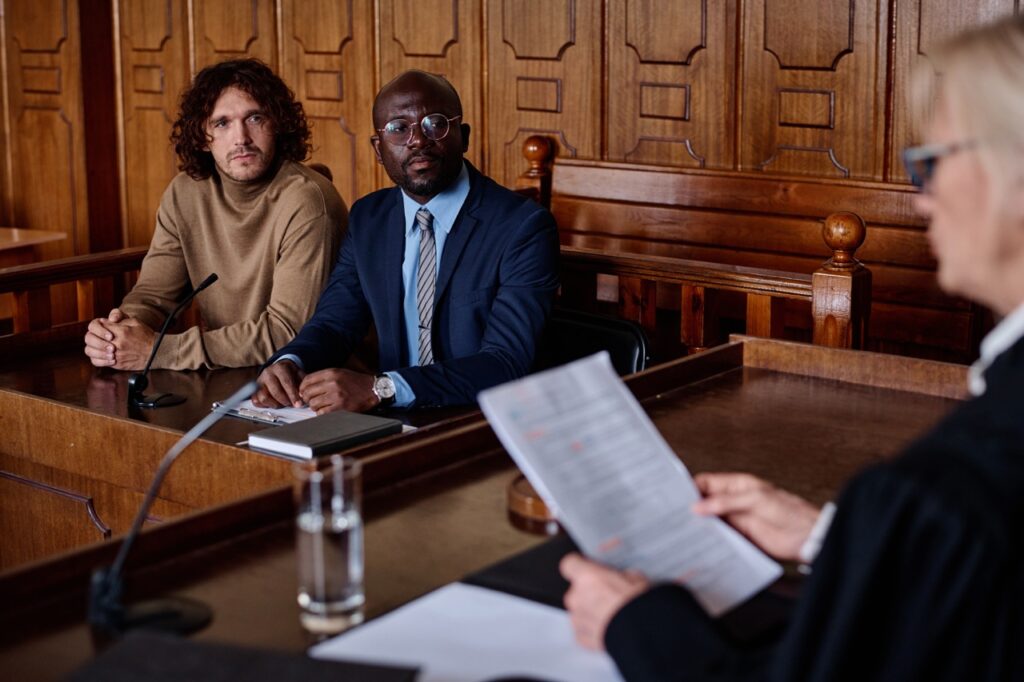

A federal investigation in Boise can start quietly, then turn into an arrest, a search warrant, or an indictment before you feel ready. Federal prosecutors and federal authorities often build cases for months, sometimes years, before a person learns they are a target.
John Malek Law Group defends people facing federal charges in Boise, Idaho. We step in early, push for answers, and fight the government’s case with a clear plan from day one. For a free, confidential consultation, call 208-747-0053.
Federal cases in Boise move through U.S. District Court
Federal criminal cases in Boise are handled in the United States District Court for the District of Idaho. The court’s Boise office is located at the James A. McClure Federal Building and United States Courthouse in downtown Boise.
Idaho’s federal court is a statewide system. The District of Idaho also maintains federal courthouses in Pocatello and Coeur d’Alene. Where a case is filed and where hearings happen can depend on the charging decision, the alleged conduct, and court scheduling.
This matters because federal court has its own rules, deadlines, and procedures. State court and federal court are not interchangeable, even when the underlying situation feels similar.
Why some Boise cases become federal crimes
Many criminal cases stay in Idaho state court. Others move into federal court because the investigation involves federal agencies, interstate conduct, federal property, federal programs, or conduct Congress chose to regulate at the federal level.
Federal prosecutors may file criminal charges tied to:
- Investigations led by federal agencies
- Allegations involving banks, wire transfers, or multi-state activity
- Drug trafficking allegations tied to larger networks
- Firearms allegations that trigger federal statutes
- White collar claims involving documents, emails, or transactions across state lines
A person can also face both federal charges and state charges from the same event. Each case follows its own court system and its own rules.
How a federal case usually starts in Idaho
Federal cases often begin long before the first court date. Some people learn about an investigation through a knock at the door, a request for an interview, a search warrant, or a subpoena. Others first hear about it at an arrest.
Once charges are filed, the Federal Rules of Criminal Procedure guide the steps that follow. Common early stages include:
Initial appearance and early hearings. Rule 5 covers the initial appearance process. The court addresses the charge, basic rights, and next steps.
Charging documents. Felony cases often proceed by indictment or information. Rule 7 addresses indictments and informations.
Search and seizure issues. If agents searched a home, phone, vehicle, or business, Rule 41 is one of the rules that governs search warrants. Suppression issues may become central in the defense strategy.
Release or detention. Pretrial release is not automatic in federal court. The federal bail statute, 18 U.S.C. § 3142, sets the framework for conditions of release and detention, including situations where a rebuttable presumption can apply.
Early choices can shape the rest of the case. That is why we focus on fast, organized action, without rushing you into decisions you do not understand.
Common federal charges we defend in Boise
Federal cases can involve serious crimes and serious penalties, including prison time, probation, large fines, and long-term consequences after a conviction. Some of the more common case types we handle include:
Federal drug crimes
Federal drug cases often involve distribution, possession with intent, or conspiracy allegations. Prosecutors may rely on statutes such as 21 U.S.C. § 841 and 21 U.S.C. § 846. These cases can involve controlled buys, informants, lab testing, and complex sentencing issues.
Federal gun offenses
Federal gun cases can involve allegations tied to possession, transfer, or use of a firearm under federal law. Charges often involve statutes such as 18 U.S.C. § 922, with penalties addressed in 18 U.S.C. § 924.
Federal fraud and white collar charges
White collar federal cases often involve paper trails, electronic records, and detailed timelines. Common examples include bank fraud and wire fraud, including charges under 18 U.S.C. § 1344 and 18 U.S.C. § 1343. These cases may turn on intent, knowledge, and what the records actually show.
RICO and racketeering allegations
Racketeering cases can include broad charging theories and multiple alleged acts. Prosecutors may use statutes such as 18 U.S.C. § 1962. These cases demand tight organization and careful challenge to each alleged link in the government’s narrative.
Sentencing, the Guidelines, and why planning early matters
Federal sentencing is structured differently than many people expect. Judges must consider the factors in 18 U.S.C. § 3553(a). Courts also consult the Federal Sentencing Guidelines published by the United States Sentencing Commission.
Guidelines analysis is not just a “later” issue. It affects early choices, including plea negotiations, motion practice, and how the case is positioned for trial. We build your plan with sentencing exposure in mind from the start, not as an afterthought.
Case timelines also matter. The Speedy Trial Act, 18 U.S.C. § 3161, sets time limits and exclusions that can affect scheduling. Each case still moves on its own track based on the facts, the court’s calendar, and litigation needs.
What we do for clients facing federal charges in Boise
People hire a federal defense lawyer because they want a real plan, not guesswork. We focus on the details, challenge the government’s evidence, and keep you informed, so you can make decisions with clear eyes.
Our federal criminal defense services may include:
- Emergency response after an arrest, search, or target letter
- Detention and release hearings under the federal bail statute
- Discovery review and evidence challenges under the Federal Rules
- Negotiation of plea bargains when it serves your goals and risk level
- Trial preparation and sentencing advocacy in federal court
You will get straight answers, practical guidance, and a team that treats your case like it matters, because it does.
Frequently asked questions
This is one focus area within our Boise criminal defense practice.